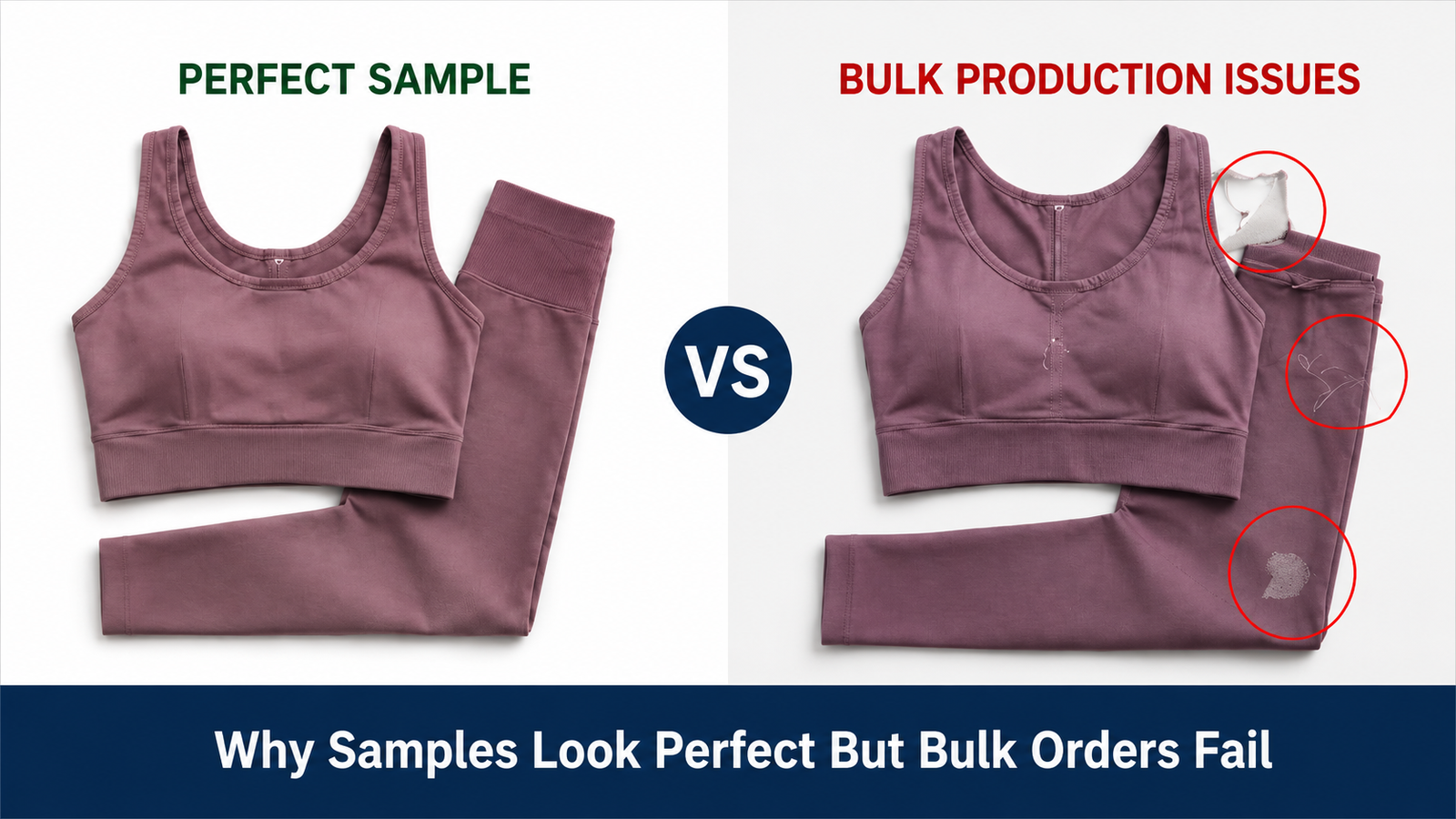
Bulk order quality issues are one of the biggest challenges buyers face when sourcing products from China.
For many importers and sourcing professionals, receiving an approved sample feels like a major milestone in the sourcing process.
The material looks correct.
The stitching appears clean.
The logo placement is accurate.
Everything seems ready for production.
Naturally, buyers expect the bulk order to match the approved sample.
However, one of the most common sourcing challenges in China manufacturing is that a perfect sample does not always result in a perfect bulk order.
During our factory visits across China, we regularly see situations where approved samples meet expectations, but mass-produced products show noticeable differences in quality, materials, workmanship, or consistency.
Understanding why this happens can help buyers reduce sourcing risks, improve supplier management, and protect their business from costly quality issues.
Why Bulk Order Quality Issues Occur During Mass Production
One of the biggest misconceptions among international buyers is believing that sample production and mass production operate under the same conditions.
In reality, they are often completely different processes.
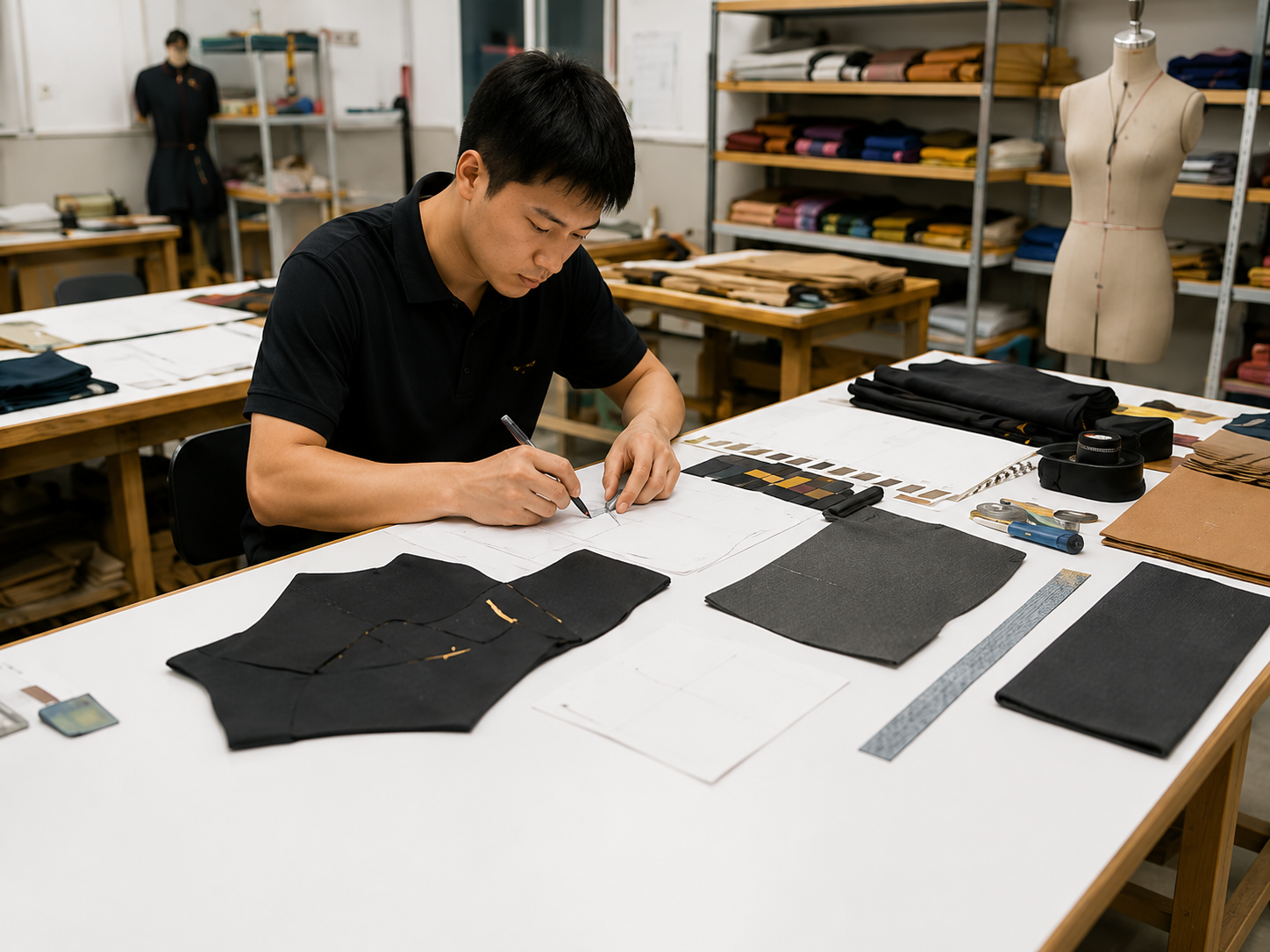
Most factories maintain dedicated sample rooms where highly experienced technicians create prototypes and development samples. Since samples are often used to win new business, factories typically assign their most experienced staff and spend extra time perfecting every detail.
Mass production is very different.
Instead of producing one or two units, factories may need to manufacture hundreds, thousands, or even tens of thousands of products within a fixed delivery schedule.
A sample may be produced by one experienced technician.
A bulk order may involve dozens of workers across multiple production lines.
As production volume increases, maintaining exactly the same level of consistency becomes significantly more challenging.
This is why sample approval should never be viewed as the end of the quality control process.
Instead, sample approval is only the beginning.
Successful sourcing requires quality management throughout the entire manufacturing process.
Common Bulk Order Quality Issues:Material Substitution(One of the Biggest Hidden Risks)
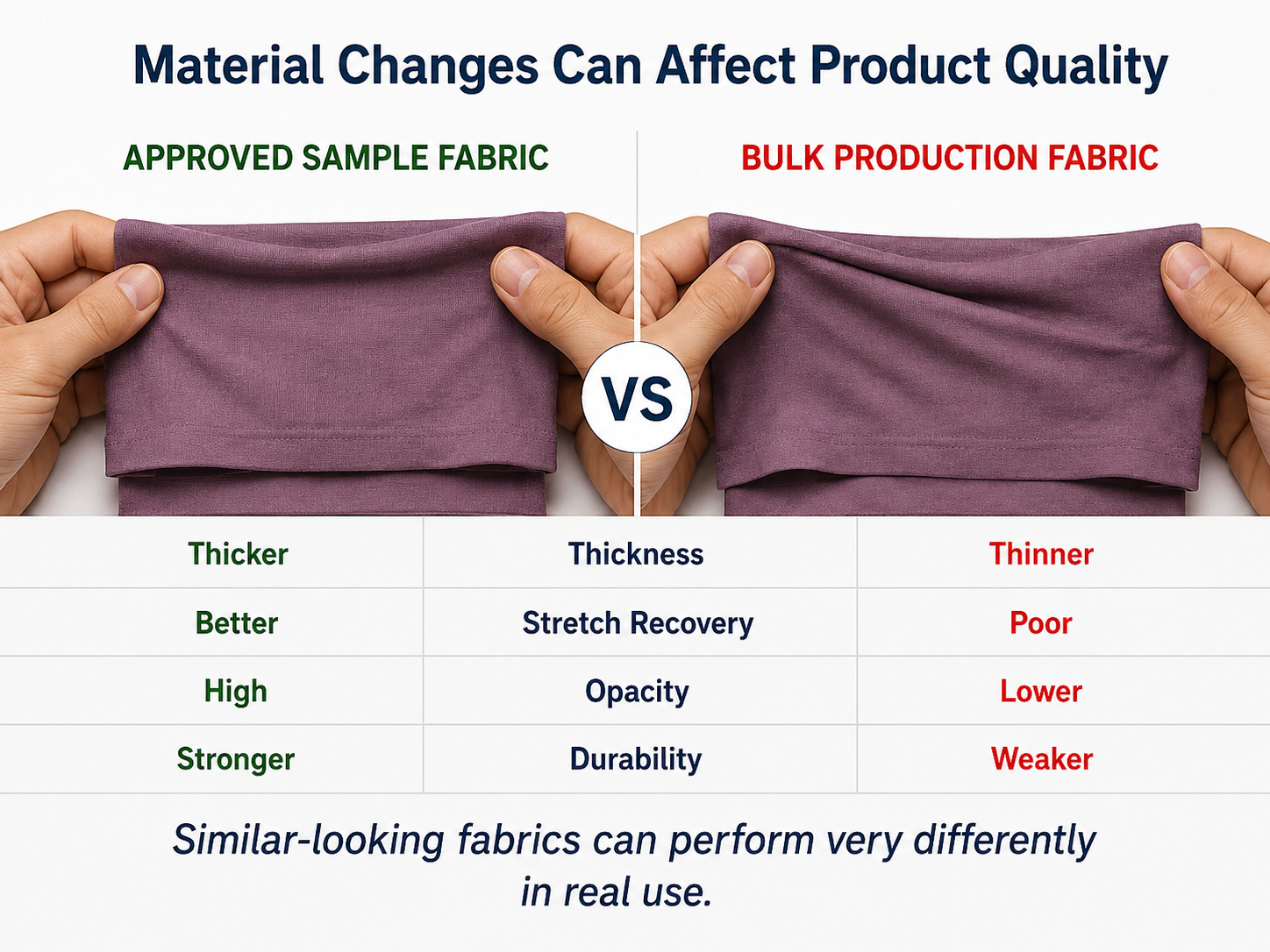
Many bulk order quality issues occur because the materials used in the bulk products were substituted compared to the approved samples.
Factories operate in highly competitive environments. They must continuously manage raw material costs, labor expenses, delivery schedules, and production capacity.
As a result, some factories may switch to alternative materials that appear similar but cost less.
At first glance, the difference may be difficult to identify.
However, performance differences often become obvious after products are used.
Example: Activewear Fabric Changes
In activewear manufacturing, a factory may replace an approved fabric with a lower GSM material from another supplier.
The replacement fabric may appear almost identical.
However, it may have:
- Lower durability
- Reduced stretch recovery
- Lower opacity
- Reduced moisture management performance
- Reduced squat-proof performance
For activewear brands, these differences directly impact customer satisfaction, product reviews, and repeat purchases.
The same issue exists across many industries.
In handbags, factories may change leather suppliers.
In furniture, wood specifications may be altered.
In consumer products, packaging materials may be substituted.
The products may look similar, but performance can be completely different.
How Supplier Changes Create Bulk Order Quality Issues
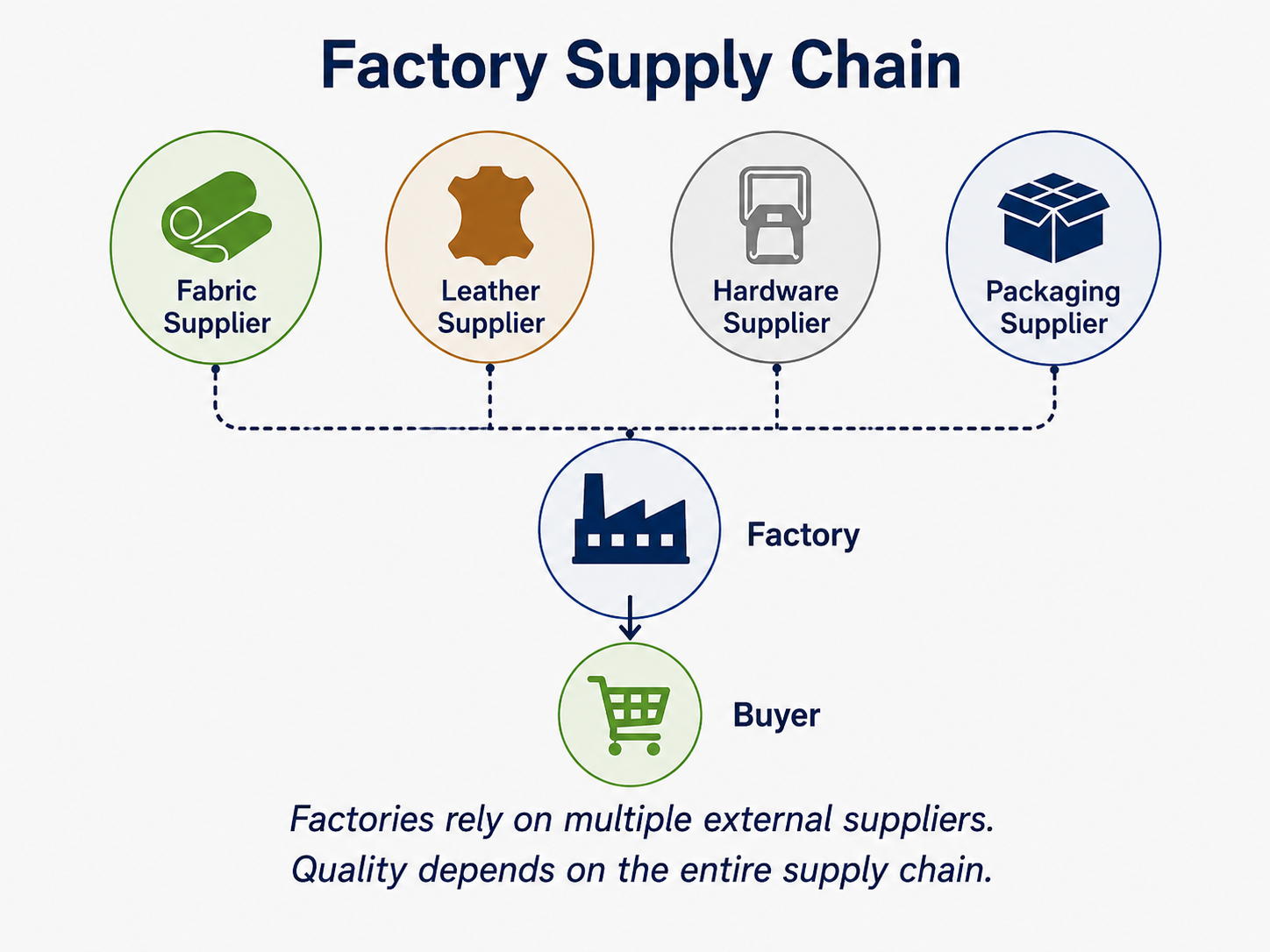
Many buyers assume factories manufacture everything themselves.
In reality, factories are manufacturers, but they are also buyers.
Most factories rely on external suppliers for:
- Fabrics
- Leather
- Zippers
- Labels
- Packaging
- Hardware
- Printing services
- Accessories
As a result, product quality depends not only on the factory but also on the suppliers supporting the factory.
During factory visits, we frequently see factories managing dozens of suppliers simultaneously.
A quality issue may originate from a fabric supplier, hardware supplier, packaging vendor, or printing contractor.
This means supplier management is just as important as factory management.
For businesses sourcing products from China, supplier verification should extend beyond the factory itself and include critical upstream suppliers whenever possible.
Real Bulk Order Quality Issues Example: When a Supplier Change Caused a Product Recall
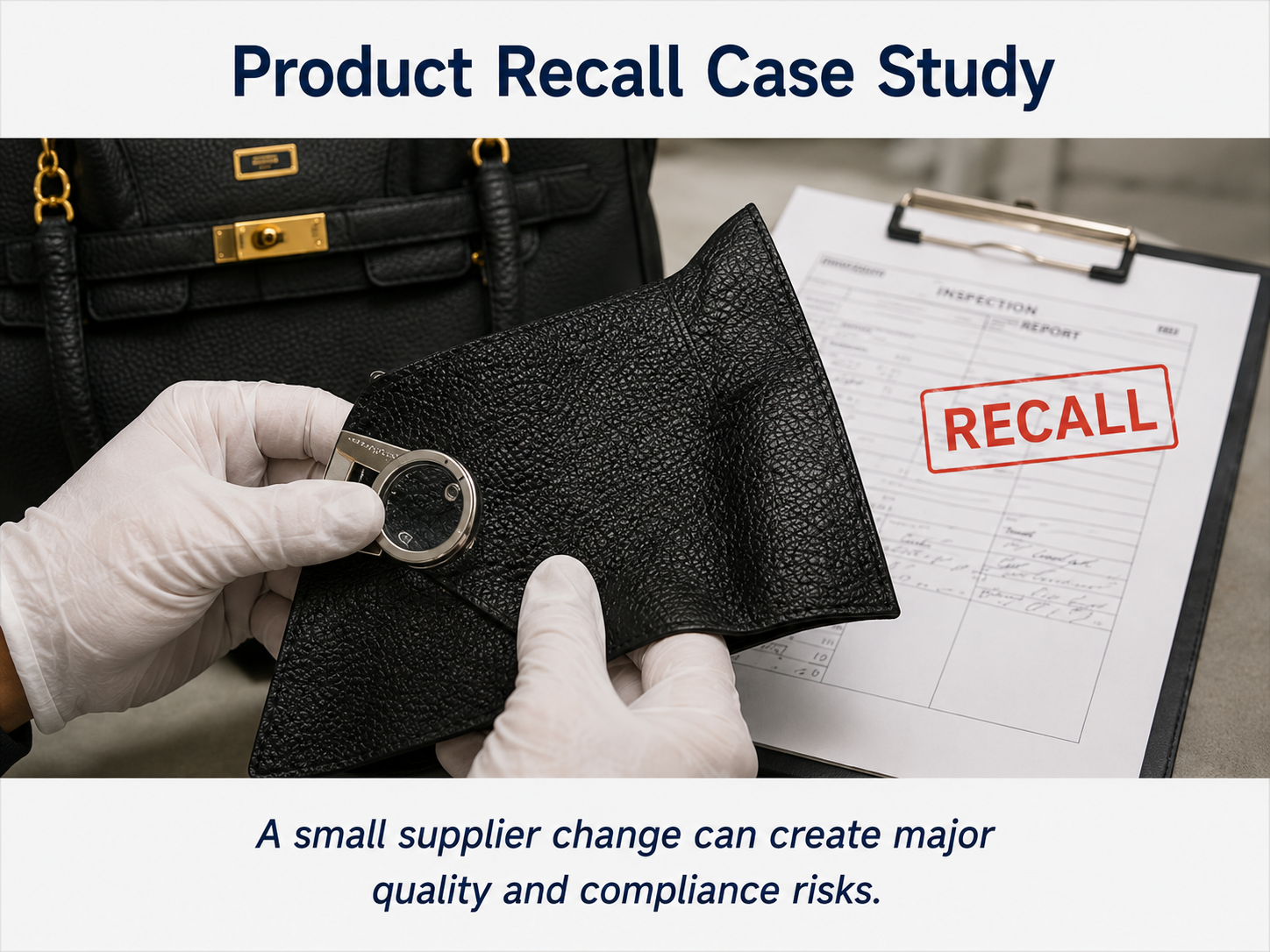
Several years ago, we encountered a case involving a handbag manufacturer producing products for a well-known international brand.
The buyer had approved a specific black pebble-grain leather supplied by an approved supplier.
During production, the factory sourced a visually similar leather from a different supplier without obtaining approval.
The leather appeared nearly identical.
The color matched.
The grain pattern matched.
The finished product looked correct.
Unfortunately, after products entered the market, customer complaints began to increase.
The replacement leather failed to meet the brand’s performance requirements.
Durability issues appeared.
Returns increased.
The products were eventually recalled.
The brand incurred substantial costs related to repairs, replacements, logistics, and customer service.
More importantly, the factory lost its approved supplier status.
A seemingly small supplier change resulted in significant financial losses and long-term damage to the business relationship.
This example highlights an important lesson:
A product that looks correct is not always a product that performs correctly.
Need Help Verifying Suppliers in China?
Global Link helps international buyers reduce sourcing risks through:
Why Factory Visits Still Matter in 2026
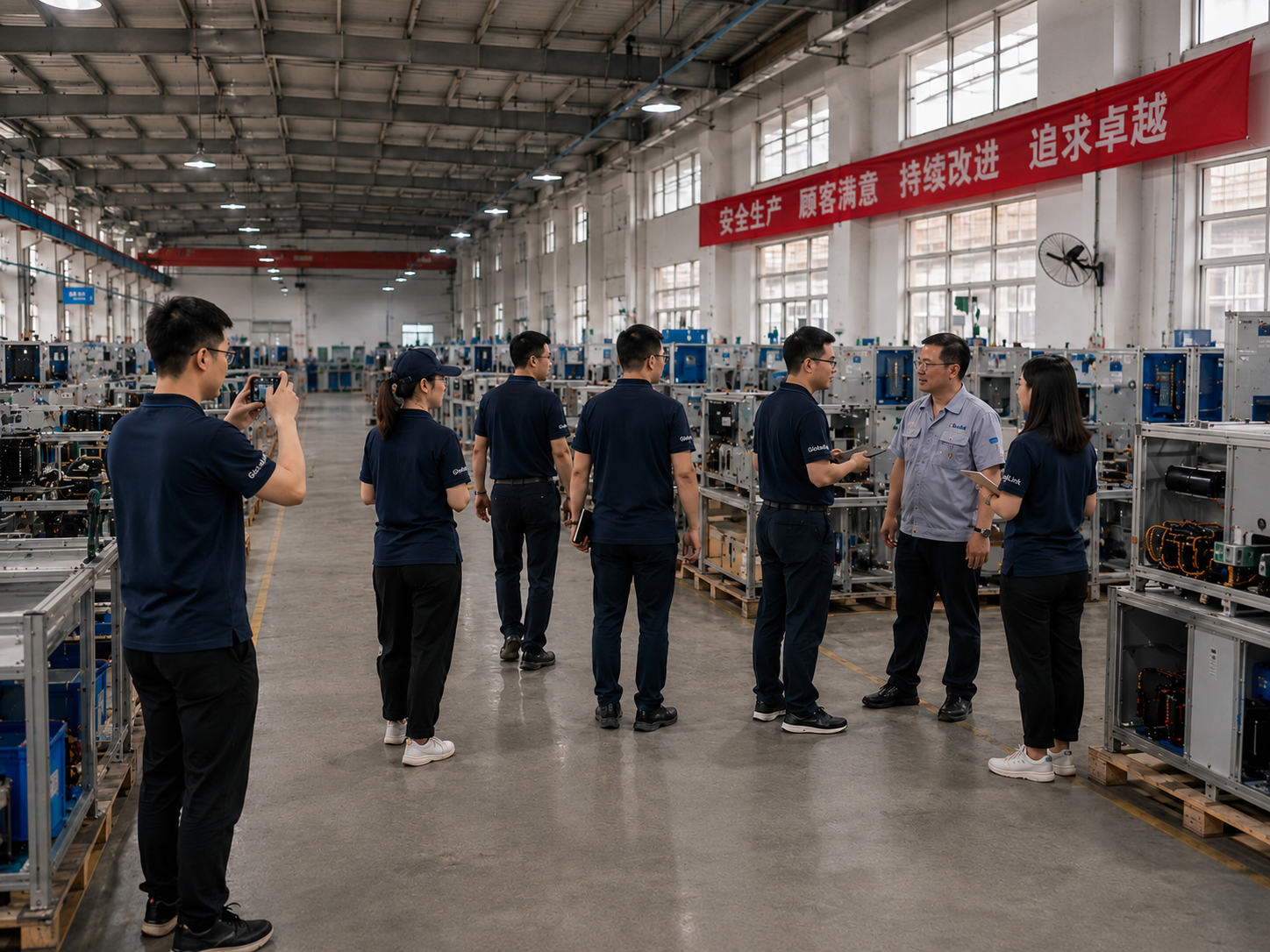
Today, many buyers rely on Alibaba, WeChat, Zoom meetings, WhatsApp calls, and factory videos to evaluate suppliers.
These tools are valuable and can improve communication.
However, they cannot replace on-site verification.
During factory visits, we often discover issues that are impossible to identify remotely.
Examples include:
- Different raw materials being used
- Production bottlenecks
- Poor factory organization
- Inadequate quality control procedures
- Excessive outsourcing
- Production capacity limitations
A video call may show a clean production line.
A factory visit may reveal that the actual production process differs significantly from what was presented online.
This is one reason why Global Link regularly conducts factory audits, supplier verification, and production monitoring throughout China.
Physical inspections often reveal details that cannot be identified through photos or online meetings.
For businesses sourcing products from China, factory visits remain one of the most effective ways to reduce risk.
Factory Visit Insights on Bulk Order Quality Issues in China
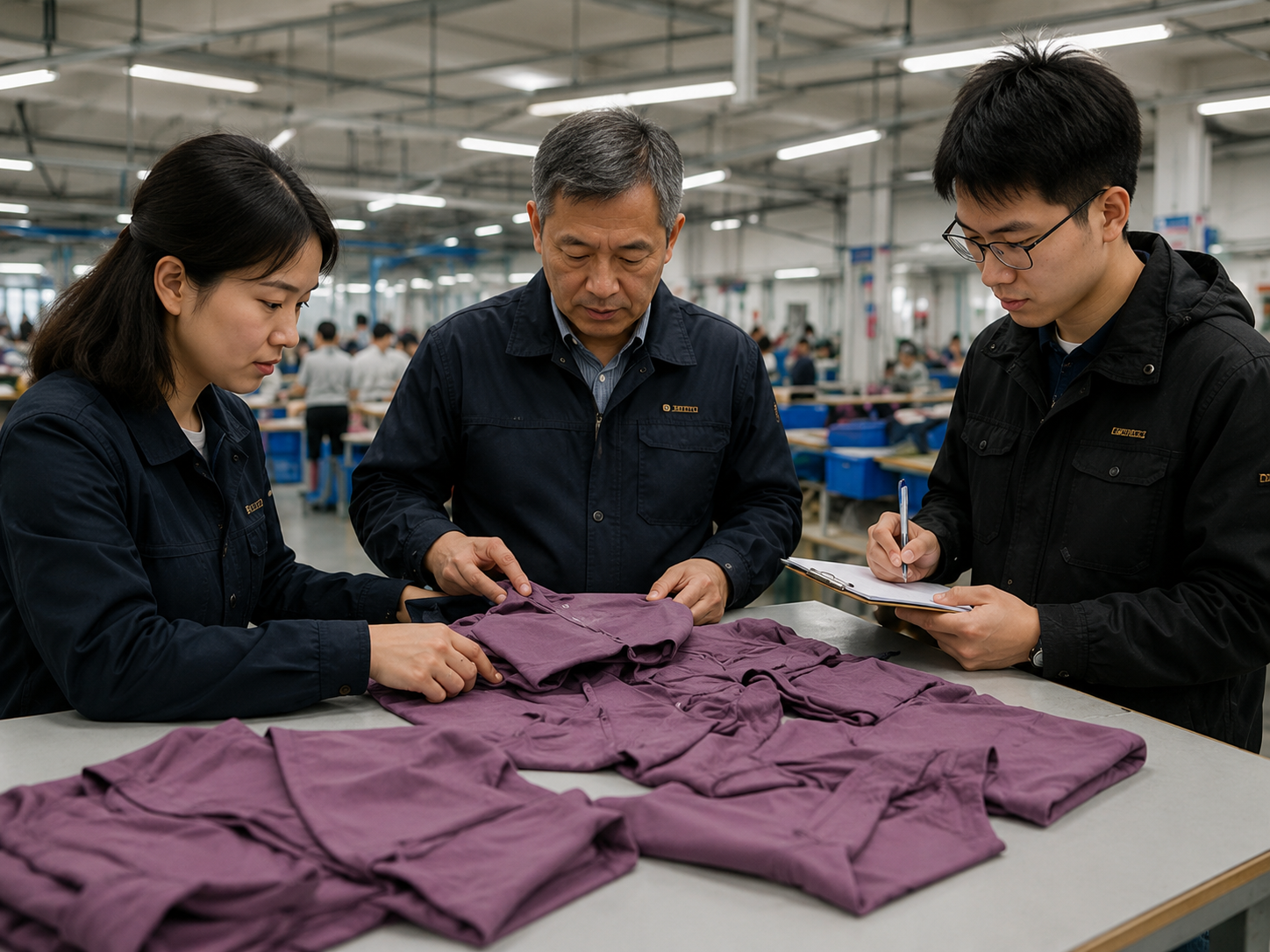
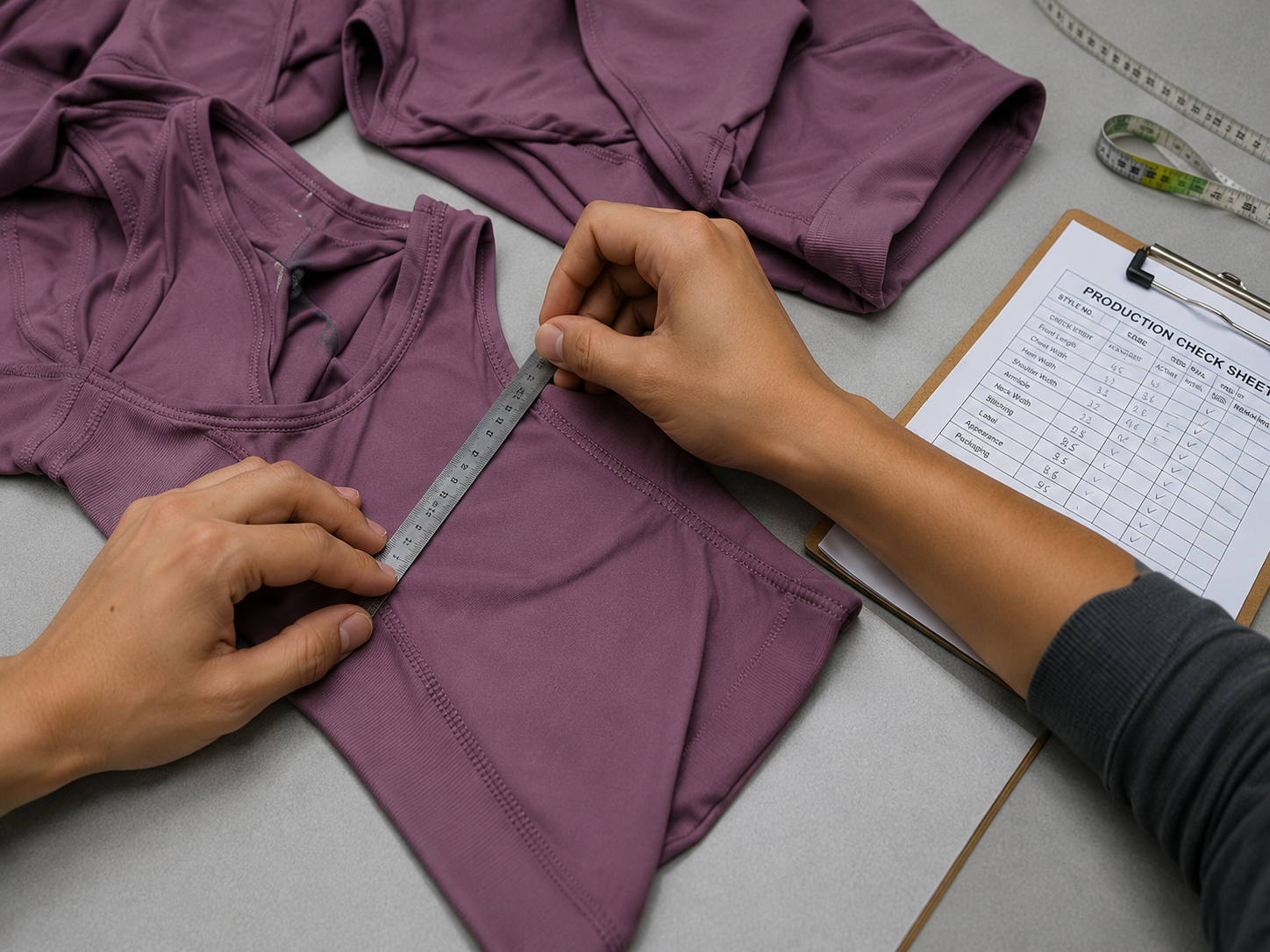
While every factory is different, there are several patterns we frequently observe during factory visits across China.
These observations are not necessarily signs of poor management. In many cases, they are simply realities of large-scale manufacturing.
However, understanding them can help buyers identify potential risks before production begins.
Production Pressure Is a Common Cause of Bulk Order Quality Issues
Many buyers only see carefully selected factory photos or promotional videos.
During an actual factory visit, production lines are often operating at full capacity.
Workers may be producing products for multiple customers at the same time.
Production managers are balancing delivery schedules, labor allocation, and quality requirements simultaneously.
This environment is very different from a sample room where one technician focuses on a single product.
As production volume increases, maintaining consistency becomes more challenging.
Poor Material Management Can Lead to Bulk Order Quality Issues
Another area we often review is material storage.
In industries such as activewear manufacturing, fabric quality can be affected by storage conditions, inventory rotation, and supplier management.
During factory visits, we evaluate:
- Fabric inventory systems
- Material labeling procedures
- Batch tracking methods
- Warehouse organization
Factories with strong inventory control systems are generally better positioned to maintain product consistency throughout production.
Weak Quality Control Systems Increase Bulk Production Risks
Not all factories manage quality control the same way.
Some factories perform inspections only after production is completed.
Others implement multiple inspection stages throughout the manufacturing process.
During our visits, we typically review:
- Incoming material inspection procedures
- In-line quality control systems
- Final inspection standards
- Defect reporting processes
Factories with structured quality systems often identify problems earlier and reduce costly rework.
Communication Problems Often Cause Production Quality Issues
One issue that is rarely visible during online meetings is internal communication.
Successful production depends on coordination between:
- Sales teams
- Purchasing teams
- Production managers
- Quality control departments
- Warehouse personnel
Even when materials and equipment are available, communication breakdowns can create delays, quality issues, and production errors.
Factory visits provide an opportunity to observe how information flows through the organization.
Factory Visits Help Identify Hidden Quality Risks
Photos, videos, and video calls are valuable tools.
However, they only show what the camera captures.
A factory visit allows buyers to evaluate:
- Production organization
- Material management
- Workforce stability
- Quality control procedures
- Production capacity
- Overall factory management
These factors often have a direct impact on product quality and delivery performance.
For this reason, many experienced importers continue to prioritize factory audits, supplier verification, and on-site inspections before placing larger orders.
How Buyers Can Reduce Bulk Order Quality Issues
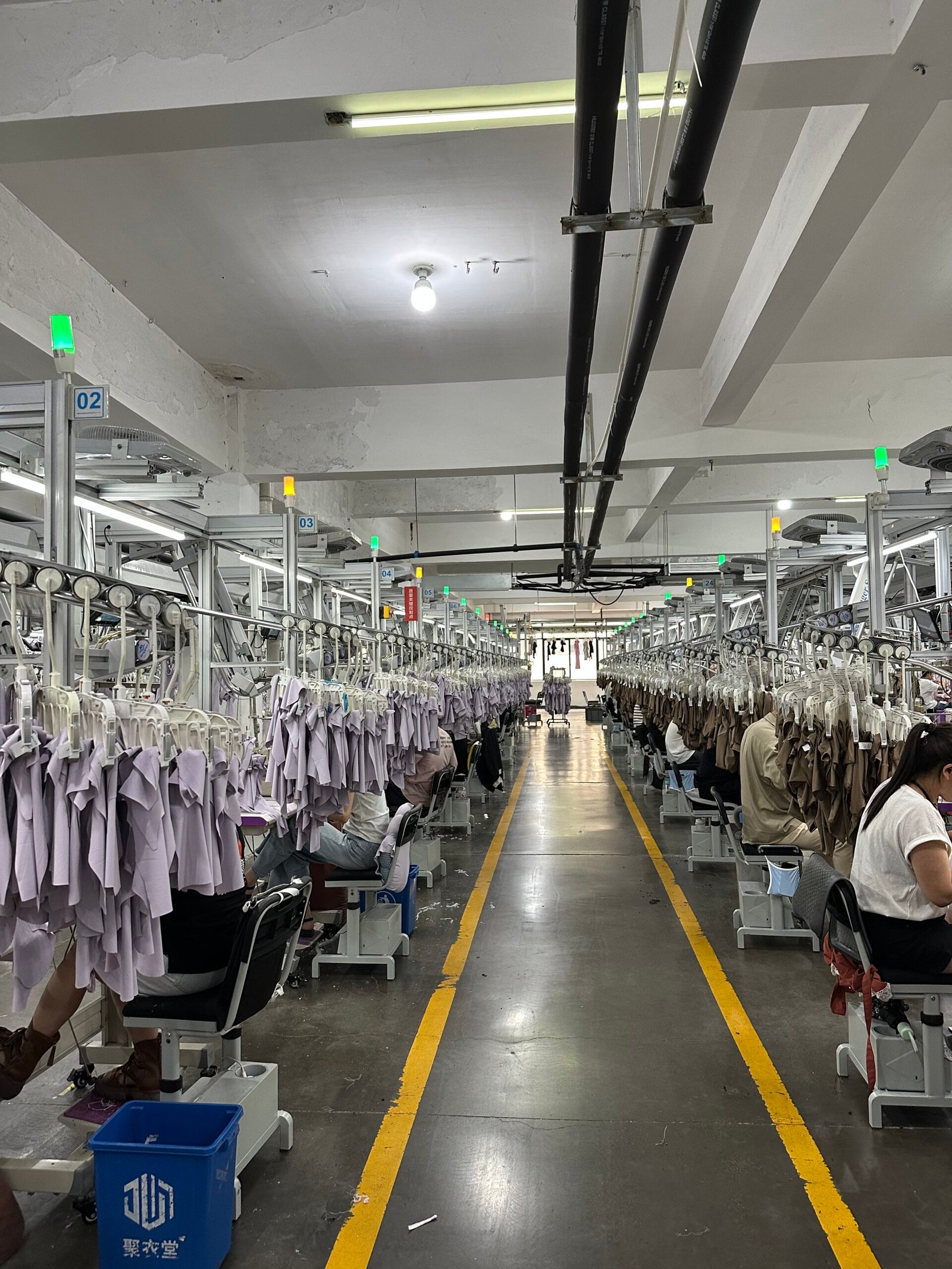
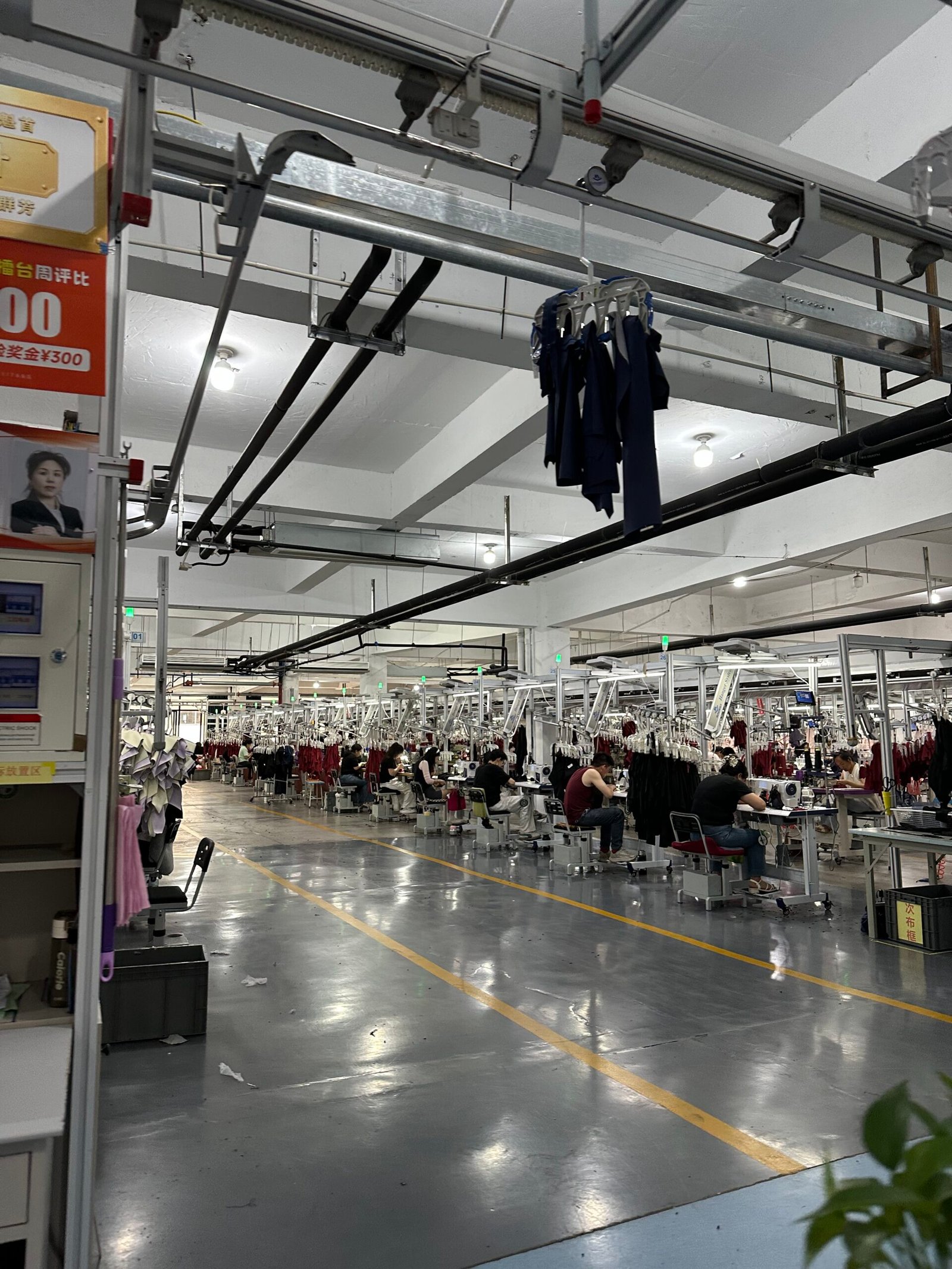
Bulk order quality issues can occur in almost every industry, including activewear, bags, furniture, consumer products, and private label manufacturing. While some quality problems are caused by material substitutions, others result from production pressure, communication breakdowns, or inadequate quality control systems. Understanding these risks allows buyers to implement preventive measures before production begins.
Another factor many buyers overlook is production pressure.
A sample only needs to be produced once.
A bulk order may require thousands of units within a strict production schedule.
Factories often manage multiple customers and multiple production lines simultaneously.
The faster a factory completes one order, the faster it can begin another.
In manufacturing, production capacity is money.
A production line occupied by one order cannot be used for another order.
For this reason, factories are often under pressure to complete production as quickly as possible while still meeting quality requirements.
As deadlines approach, pressure increases.
Workers must produce more units per hour.
Production managers focus on output targets.
Quality control teams face greater challenges.
Even well-managed factories can experience variations when production volume increases.
This is simply one of the realities of large-scale manufacturing.
Best Practices to Prevent Bulk Order Quality Issues
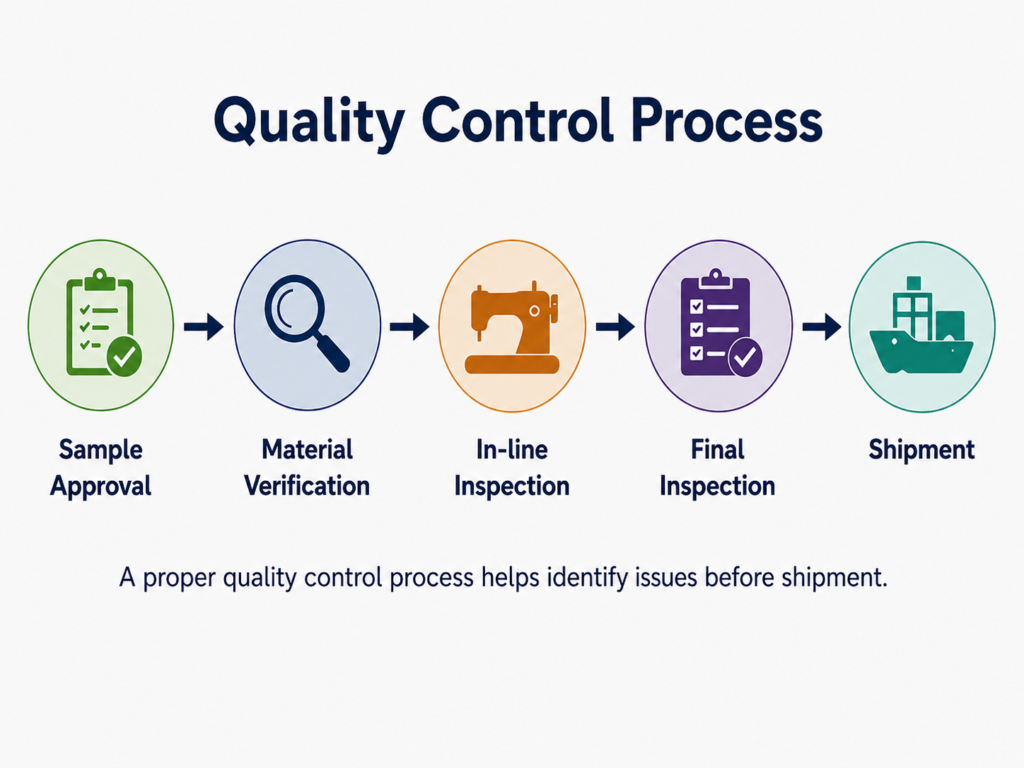
Although no manufacturing process is completely risk-free, buyers can significantly reduce risk through proper controls.
Recommended Risk Reduction Checklist
Step 1: Approve Material Specifications
Document all material requirements clearly.
Step 2: Verify Critical Suppliers
Confirm fabric, hardware, and packaging suppliers whenever possible.
Step 3: Review Pre-Production Samples
Verify that production materials match approved specifications.
Step 4: Conduct In-Line Inspections
Identify issues before large quantities are completed.
Step 5: Perform Final Quality Inspections
Inspect products before shipment.
Step 6: Follow AQL 2.5 Inspection Standards
Use internationally recognized quality inspection procedures.
Step 7: Conduct Factory Visits
Verify production conditions in person whenever possible.
These steps help identify potential issues before products leave the factory.
Final Thoughts on Bulk Order Quality Issues
A perfect sample is important.
But successful sourcing depends on much more than sample approval.
The reality of manufacturing involves supplier management, production pressure, material control, quality systems, and communication across the entire supply chain.
During our factory visits across China, we regularly see how small differences in these areas can create major differences in final product quality.
This is why experienced buyers focus not only on samples, but also on supplier verification, factory audits, production monitoring, and quality inspections.
At Global Link, our goal is simple:
Help international buyers reduce sourcing risks and ensure bulk production matches approved expectations.
Whether you are sourcing activewear, bags, home products, consumer goods, or OEM products, visibility into the manufacturing process remains one of the most effective ways to protect product quality and business reputation.
Planning to Place a Bulk Order in China?
Let Global Link help you verify suppliers, monitor production, and reduce bulk order quality issues before they become costly problems.
Whether you are sourcing:
- Activewear
- Bags
- Home Products
- Consumer Goods
- OEM Products
- Private Label Products
Our team can help you:
✓ Verify Suppliers
✓ Visit Factories
✓ Monitor Production
✓ Perform AQL 2.5 Inspections
✓ Manage End-to-End Sourcing Projects
Frequently Asked Questions (FAQ)
Samples are often produced by experienced technicians under controlled conditions, while bulk orders involve larger production volumes, multiple workers, and different production batches. Variations in materials, workmanship, color consistency, and production processes can sometimes lead to differences between approved samples and mass production.
In some cases, yes. Factories may change suppliers or materials due to cost increases, lead time issues, or sourcing challenges. This is why material specifications and supplier verification are important.
No. Most factories rely on external suppliers for fabrics, hardware, packaging materials, labels, and many other components.
Video calls are useful, but they cannot always reveal differences in material quality, workmanship, durability, production management, or supplier changes.
Even small orders can benefit from supplier verification and quality inspections, especially when working with a new supplier for the first time.
AQL 2.5 is an internationally recognized quality inspection standard used to determine acceptable defect levels before shipment and reduce quality risks.
No. A final inspection can identify defects before shipment, but it cannot correct production problems that have already occurred. Many experienced importers combine pre-production reviews, in-line inspections, and final inspections to reduce quality risks throughout the manufacturing process.
Buyers can reduce bulk order quality issues by implementing quality control measures throughout the production process. This includes verifying materials before production, approving detailed product specifications, conducting in-line inspections, and arranging final quality inspections before shipment. Factory audits, supplier verification, and regular production monitoring can further reduce sourcing risks and help ensure bulk production matches approved samples.